Activities
Husky safari with kids – how it works, age, clothing and animal welfare
For many children the husky ride is the highlight of the trip. What to expect and what to look for when choosing an operator.
Contents
This article contains advertising (affiliate) links, marked “Ad”. How we label ads
In short: On husky safaris children usually sit in the sled while adults drive themselves or ride with a guide. Minimum age, duration and clothing are set by each operator – ask before booking. For families with small children, short tours of one to two hours are usually a better choice than full-day trips. Pay attention to animal welfare: small groups, healthy-looking dogs, open information about kennels and rest days. As of October 2026.
How a husky safari works
- Pick-up and changing: many operators collect you from your accommodation and provide thermal overalls, boots, mittens and hats.
- Briefing (10–20 minutes): how to brake, how to shift your weight in bends, how much distance to keep from the sled in front. The golden rule: never let go of the sled – the dogs will simply carry on without you.
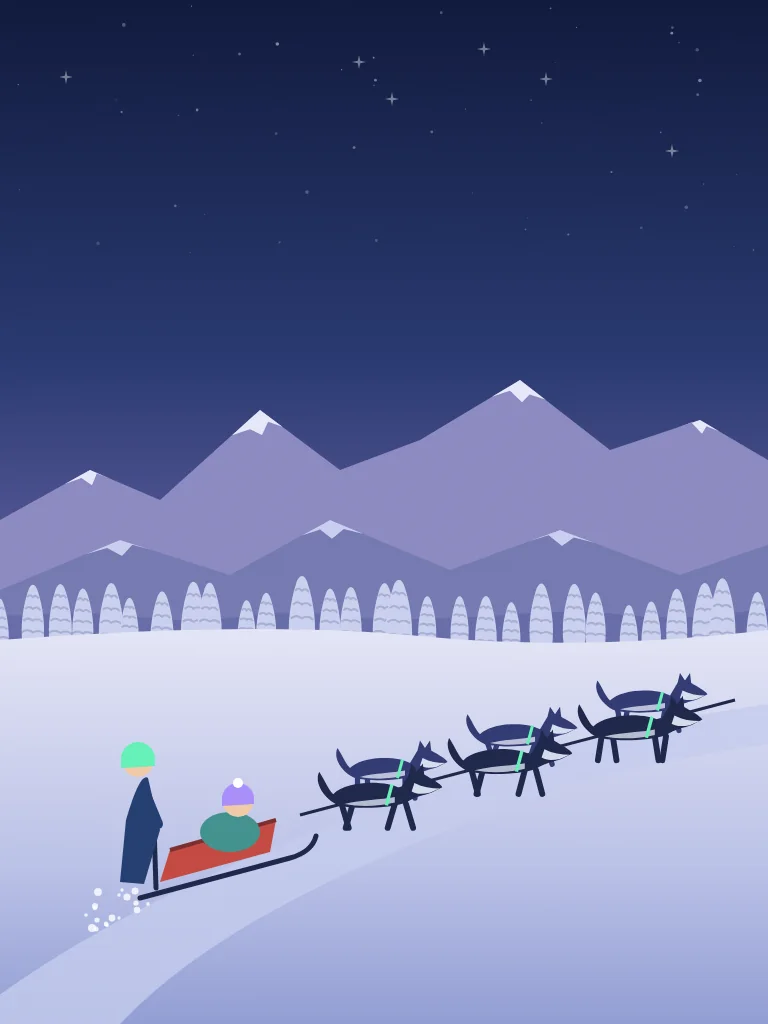
- The ride: depending on the programme, short loops on a training track or longer tours through forest and across frozen lakes. Usually two people share a sled: one stands on the runners and steers, the other sits in the sled. You often swap halfway.
- Break: on longer tours, by a fire in a kota (Lappish hut) with hot juice, coffee or sausages.
- Meeting the dogs: many farms show you their dogs and talk about training and breeding – often just as exciting for children as the ride.
Which tour suits you?
| Programme | Duration | Suits | Watch out for |
|---|---|---|---|
| Taster ride at the farm | 15–45 min ride, 1–2 h in total | Toddlers, cautious kids | Short track, lots of time with the dogs |
| Half-day tour | 1.5–3 h ride, 3–4 h in total | Families with school-age children | Colder than expected; a warm break matters |
| Full-day tour | 4–6 h ride | Teenagers, adults | Physically demanding, too long for small children |
| Evening tour with aurora chance | 2–3 h | Older children, adults | Late and cold; auroras not guaranteed |
| Multi-day tour with cabin nights | 2–5 days | Experienced adults | Good fitness, very warm gear |
As a rough price guide (as of October 2026, no guarantee): short farm visits with a ride often cost around €60–150 per person, half-day tours around €150–280 per adult; children usually pay a reduced rate. In northern Norway prices tend to be at the upper end. How it fits into a family budget: What does a family trip to Lapland cost? The cost factors.
Children and age limits
Small children usually ride as passengers in the sled, well wrapped up and often on a reindeer hide. Whether and from what age they may drive is up to the operator – often only from their teens and together with an adult. Some operators also have weight or height limits for drivers.
For toddlers: you hardly move in the sled, and the headwind cools you further. Short programmes with a warm break suit them better than long tours. If a child is cold or scared, it should be possible to stop – ask beforehand.
Clothing: warmer than you think
Many operators provide overalls, boots and mittens. Underneath you need:
- A base layer of merino or synthetic fabric (no cotton)
- A mid layer of fleece or wool – two in severe cold
- A balaclava or neck gaiter – the wind hits your face
- Thin liner gloves under the mittens
- For children: spare gloves and socks, warmers in pockets and boots
The full list: Packing list for −30 °C and the polar night – also with kids.
Animal welfare: how to recognise a good operator
Dog sledding is a big business. Most operators take good care of their animals – but not all. Look for:
- Small groups and enough guides per group
- Open information about kennels, rest days, number of runs per day and what happens to older dogs (e.g. retirement on the farm or rehoming)
- Healthy-looking dogs: alert, well fed, with shelter from wind and weather and enough space
- No excessively long programmes with many back-to-back runs without breaks
- Water and breaks for the dogs on the trail
- Clear information on minimum age, weight and health requirements
- Reviews that talk specifically about dogs and guides, not just photos
Huskies bark and leap into their harnesses before the start – that is normal and shows they want to run. Once you set off, it becomes surprisingly quiet.
Safety
- Never let go: if you fall off, the dogs keep running. The guides will catch the team – stay calm and wave.
- Keep your distance: several metres to the sled in front so the dogs do not run into each other.
- Braking: on descents and in bends, stand on the brake with both feet when the guide tells you to.
- Watch for cold: check children’s cheeks, nose and hands regularly. White, numb patches are a warning sign of frostbite.
- Glasses and phones: stow phones well – they drain fast in the cold and are easily lost in snow.
Common mistakes
- Booking a long full-day tour with children under six
- Too few layers under the rented overall
- Scheduling the tour on arrival day – tiredness and cold are a poor mix
- Booking too late in peak season: popular slots around Christmas go early
- Trying to film while driving instead of holding on – ask the guide or your passenger instead
Husky or reindeer?
Reindeer farms are usually calmer and slower and suit very small children; most also offer an insight into Sámi culture. Husky tours are faster, louder and more physical – which is exactly what many children love. Ideally combine both on different days. Where to find which activities: Rovaniemi, Levi or Saariselkä? Lapland destinations compared and Tromsø in winter – polar night, northern lights, trips and practical tips. More family tips: Planning Lapland with kids – season, places, activities, clothing.
Frequently asked questions
TipWhat is the minimum age for a husky safari?
As a passenger in the sled, often quite young; the exact limits are set by the operator. Children are usually only allowed to drive much later and with an adult.
SafetyHow cold is it on the sled?
Colder than walking, because you barely move and there is headwind. Pack more layers than you think and protect your face.
Getting thereDo you need experience to drive a sled?
No. The briefing is enough for normal tours. Some balance and leg strength help with braking.
TipAre there husky tours without snow?
In some places in autumn, as cart rides on forest tracks. Classic sledding needs a continuous snow cover – depending on place and winter, usually from late November or December until April.
Read next

Activities
Northern lights tours compared – coach, small group or photo tour?
Join a tour or chase on your own? A comparison of tour types – and the questions to ask before booking.
Basics
Where and when to see the northern lights
Darkness, clear skies, a bit of solar activity – and the right place. How to plan your chances of seeing the aurora realistically instead of relying on luck.
Trip planning
Planning Lapland with kids – season, places, activities, clothing
Reindeer, huskies, snow to the horizon – and temperatures where planning matters. What really counts on a Lapland trip with children.