Basics
Where and when to see the northern lights
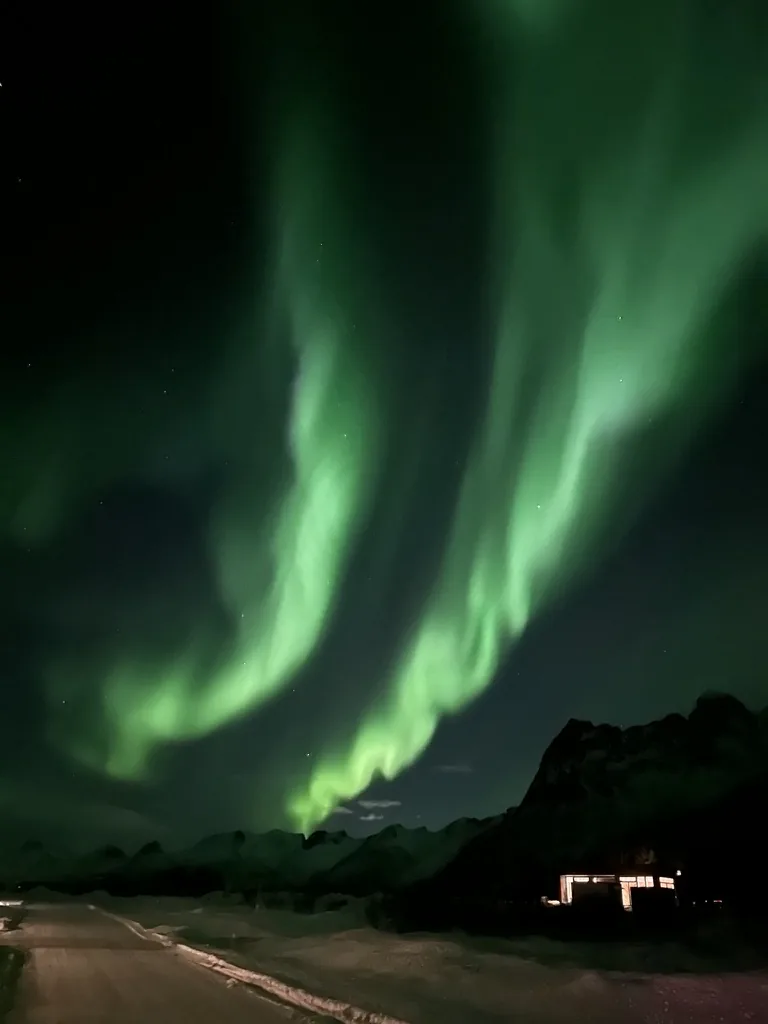
Darkness, clear skies, a bit of solar activity – and the right place. How to plan your chances of seeing the aurora realistically instead of relying on luck.
Contents
This article contains advertising (affiliate) links, marked “Ad”. How we label ads
In short: Your best chances are from late August to early April, roughly between 64° and 71° north – in Iceland, northern Norway and the north of Finland and Sweden. Around the equinoxes in September and March geomagnetic activity is higher on average. Most important of all, though, is a cloud-free sky: plan several nights and stay flexible. As of October 2026.
What it takes to see the aurora
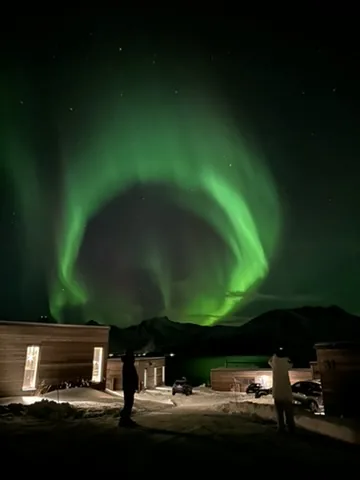
Auroras form when charged particles from the solar wind hit the upper atmosphere and make oxygen and nitrogen atoms glow. This happens mainly in a ring-shaped zone around the magnetic north pole, the auroral oval. For you to see them, four things must come together:
- Darkness: in high summer it stays too bright in the far north.
- A clear sky: clouds are the most common reason it does not work out.
- Activity: the stronger the solar wind and the more favourably its magnetic field is aligned, the brighter the aurora and the further south it reaches.
- A place under the oval: in northern Scandinavia and Iceland the chances are good even at low activity.
When is the best time?
Months
The season runs roughly from late August to early April – as long as nights are dark enough. Around the equinoxes (September and March) geomagnetic storms occur more often on average. The Russell-McPherron effect explains this with the orientation of Earth’s axis relative to the Sun’s magnetic field; according to British Geological Survey data, March has on average almost twice as many days with major magnetic storms as June or July.
December and January have the longest nights, but often more cloud and severe cold. According to Hurtigruten the polar night lasts from about 27 November to mid-January in Tromsø and from about 7 December to 5 January in Lofoten. September/October and February/March are good compromises between darkness, weather and daylight for excursions. Month by month for Norway: Best time for northern lights in Norway – month by month.
Time of night
Auroras can appear all night as soon as it is dark. Many guides name the hours around midnight (roughly 10 pm to 2 am) as particularly promising. But do not rely on a time window: activity often comes in bursts lasting 15–30 minutes that can repeat several times a night.
Solar cycle 2026/27
According to the Belgian solar research centre SIDC/STCE, the current solar cycle 25 reached its maximum in October 2024. Activity stays high for quite a while after the maximum; strong magnetic storms occurred, for example, in October 2024, June 2025 and January 2026. For the 2026/27 season that means continued good chances. In northern Scandinavia and Iceland, however, the solar cycle matters less than the weather – auroras are seen there regularly even in quieter years.
Moon
The full moon brightens the sky and makes faint auroras fade; on the other hand, landscape photos by moonlight are especially beautiful. If you specifically want to see faint activity, plan around new moon.
How many nights should you plan?
Because weather is the biggest uncertainty, every extra night increases your chance. Plan several nights at one place in the far north rather than a single night as a side trip. Ideal is a base from which you can dodge clouds in different directions – for example inland, where the sky often looks different from the coast.
And at home in Central Europe?
During very strong geomagnetic storms auroras are visible in Central Europe too – most recently, for example, in May and October 2024. Such events are rare and hardly predictable. If you want to experience the northern lights for sure, head north.
Where your chances are best
| Region | Strengths | Watch out for |
|---|---|---|
| Northern Norway (Tromsø, Senja, Alta) | Good infrastructure, many tours, relatively mild coast | Changeable coastal weather, often cloudy; polar night in December |
| Lofoten | Spectacular scenery of mountains and sea | Very changeable weather, demanding roads in winter |
| Finnish Lapland (Rovaniemi, Levi, Saariselkä, Inari) | Easy to reach, family-friendly, many activities | Very cold; only about 2¼ hours of sun in Rovaniemi on 21 Dec |
| Swedish Lapland (Abisko, Kiruna) | Inland, quiet landscape | Fewer places to stay, long distances |
| Iceland | Auroras plus waterfalls, glaciers, geothermal baths | Weather changes fast; road closures in winter |
Basic rule for choosing your base: away from town lights, a clear view north and options to escape clouds. With a rental car or a tour that chases gaps in the clouds, your chances rise considerably. More on the destinations: Tromsø in winter – polar night, northern lights, trips and practical tips, Lofoten in winter by car – route Svolvær, Henningsvær, Leknes, Reine, Å, Rovaniemi, Levi or Saariselkä? Lapland destinations compared.
Colours and what the eye really sees
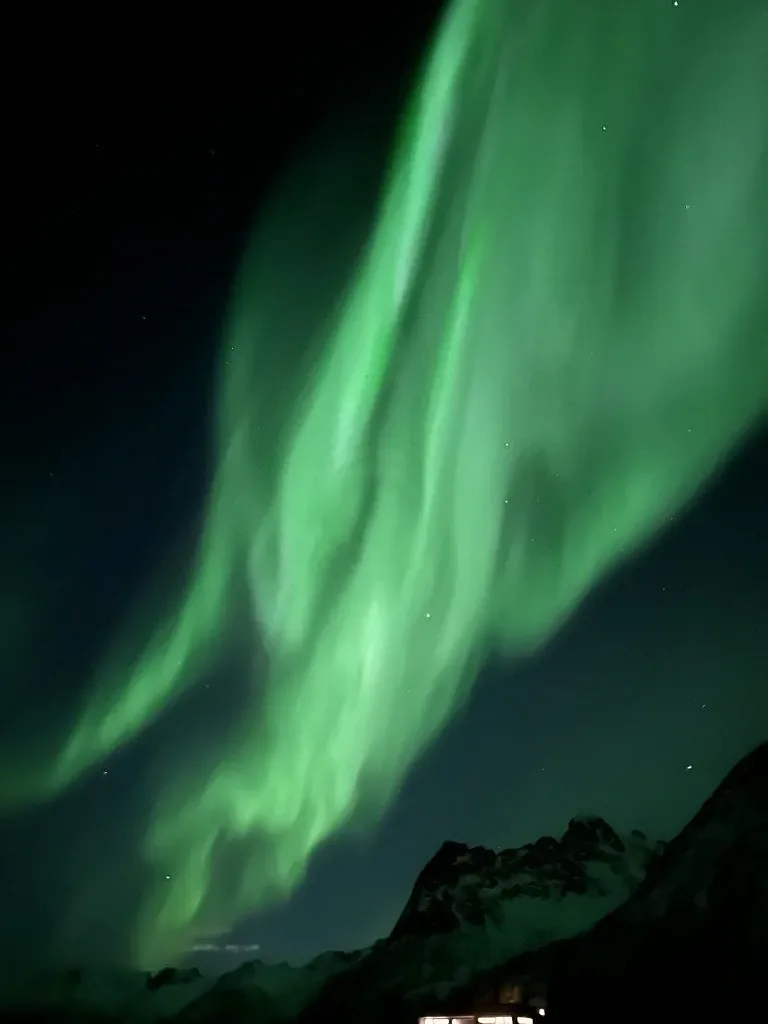
Green auroras are the most common: they come from oxygen at around 100 to 250 km altitude. Red parts come from oxygen at greater heights and appear mainly during strong activity; violet and bluish fringes come from nitrogen. Important for your expectations: the human eye sees colours less well at night than a camera. Faint auroras often look like grey or pale-green veils to the naked eye and only appear vivid green in photos. During strong activity, however, colours and movement are impressive even without a camera.
Reading forecasts correctly
- Cloud forecast first: for Iceland the aurora and cloud map of the Icelandic Met Office (Veðurstofa Íslands), for Norway yr.no, for Finland the FMI weather service.
- Kp index: a measure of global geomagnetic activity from 0 to 9. In the far north low values are often enough; higher values mean brighter auroras extending further south. But the Kp index is a rough short-term forecast, not a guarantee.
- Short-term data: the 30-minute forecast of the US agency NOAA (SWPC) shows the expected position of the auroral oval. The Finnish Meteorological Institute’s aurora service shows current magnetometer readings in Lapland.
- Apps with alerts help, because activity often rises at short notice.
All details: Understanding the aurora forecast – Kp index, Bz and clouds.
Photographing the northern lights
- A tripod is a must; switch off image stabilisation.
- Focus manually on a distant point of light (a star or a light on the horizon).
- Starting values: widest aperture, ISO 1,600–3,200, exposure 2–15 seconds – the faster the aurora moves, the shorter.
- Phone: night mode with the phone resting on something works surprisingly well for bright auroras.
- Batteries lose capacity quickly in the cold: keep spares close to your body.
More: Photographing the northern lights with phone and camera – settings that work.
Safety when aurora hunting
- Never stop on the road or in blind bends – accidents happen again and again in Iceland and Norway.
- Standing still for long in sub-zero temperatures chills you quickly: more layers than for walking, warm drinks, warmers. Packing list: Packing list for −30 °C and the polar night – also with kids.
- A head torch with red light protects other people’s night vision.
- Check weather and road conditions; in Iceland via the official road information.
Iceland in winter
Iceland lies almost entirely under the auroral oval and offers waterfalls, glaciers and geothermal baths alongside the aurora. In winter, however, the weather decides everything: storms, snow and black ice can close roads at short notice. Build in buffer time and check road conditions before every drive on umferdin.is (Icelandic Road Administration) and warnings on safetravel.is. For the aurora night, the cloud map of the Icelandic Met Office (vedur.is) is the key source.
We are planning our Iceland trip for winter 2026/27. Our planning basis: Iceland in winter by rental car – planning, roads, insurance, auroras.
A place that often stays clearer than the coast: Abisko – northern lights in Swedish Lapland, Aurora Sky Station and how to get there.
Frequently asked questions
TipCan you see the northern lights in summer?
Practically not in the far north, because it does not get dark enough at night from about May to August. The season starts in late August and ends in early April.
TipWhich Kp value is enough in northern Norway?
Around Tromsø and Lofoten auroras can be visible even at low Kp values, because these places are close to the auroral oval. A clear sky usually matters more. More: Understanding the aurora forecast – Kp index, Bz and clouds.
TipAre the northern lights guaranteed?
No. Nobody can guarantee auroras. Several nights, a dark location and flexibility with clouds increase your chances considerably.
Sources
- STCE/SIDC – Solar Cycle 25 reached its maximum in October 2024
- Space.com – Equinox and auroras: the Russell-McPherron effect (03/2023)
- Hurtigruten – Polar night in Norway (Tromsø, Lofoten and more)
- WeatherSpark – Rovaniemi climate (daylight, temperatures)
- Icelandic Met Office – Aurora forecast
- NOAA SWPC – Aurora 30-Minute Forecast
- Finnish Meteorological Institute – Auroras Now!
Read next
Basics
Understanding the aurora forecast – Kp index, Bz and clouds
Kp 2, Bz negative, 80 percent cloud – what does that mean for tonight? How to read aurora forecasts without getting lost in numbers.
Basics
Polar night and daylight – how dark is it up north really?
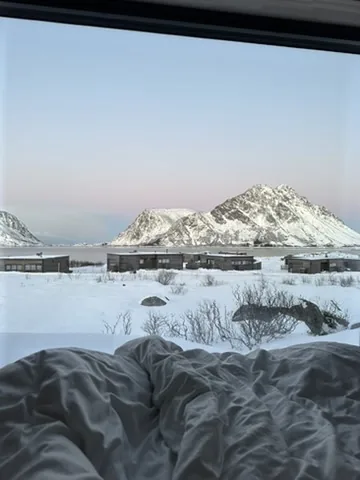
Polar night sounds like 24 hours of black. In fact there is a special blue light at midday – if you plan your day well.
Trip planning
Planning Lapland with kids – season, places, activities, clothing
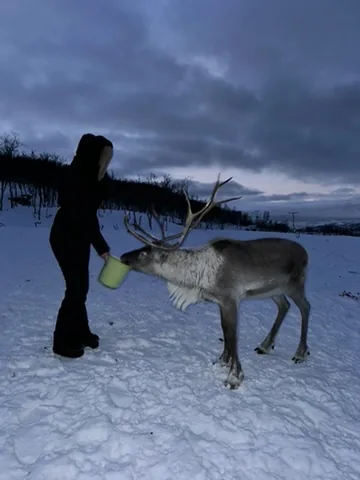
Reindeer, huskies, snow to the horizon – and temperatures where planning matters. What really counts on a Lapland trip with children.