Trip planning
Best time for northern lights in Norway – month by month
Polar night in December or autumn colours in September? Each month has its strengths. An honest comparison for planning your aurora trip.
Contents
This article contains advertising (affiliate) links, marked “Ad”. How we label ads
In short: In northern Norway auroras are possible from late August to early April. Around the equinoxes in September and March geomagnetic activity is higher on average, and there is enough daylight for excursions. December and January offer the longest nights and the atmospheric polar night, but little light and often changeable coastal weather. If you can, plan at least four to five nights and pick a base from which you can escape clouds. As of October 2026.
The season at a glance
| Period | Strengths | Watch out for |
|---|---|---|
| Late August – September | Dark nights return, autumn colours, open roads, often milder | Nights still shorter; changeable weather |
| October | Good balance of darkness and daylight | First snow possible, lots of rain on the coast |
| November | Long nights, fewer crowds than December | Short days; polar night in Tromsø from late November |
| December – mid-January | Polar night, Christmas atmosphere, blue twilight | Hardly any daylight, high prices around the holidays, often stormy |
| February – March | Snow, much more daylight, statistically active equinox | Winter school holidays – book early |
| Early April | Last dark nights, long bright days | End of season, nights quickly become too bright |
Month by month: light, weather, activities
| Month | Daylight in Tromsø (approx.) | Typical coastal temperatures | Good for |
|---|---|---|---|
| September | 15–11 hours | about 5–10 °C | Hiking, fjord trips, reflections |
| October | 11–6 hours | about 0–6 °C | Road trips without much snow, autumn hikes |
| November | 6 hours to polar night | about −3 to 2 °C | First winter tours, whale season in the fjords in some years |
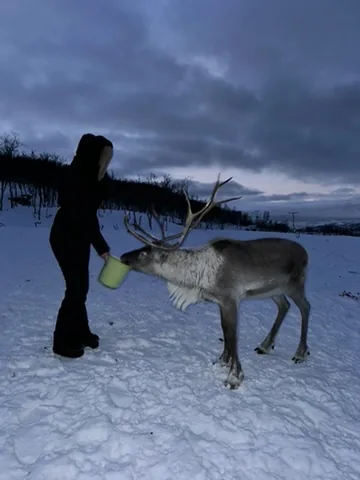
| December | Polar night, twilight around midday | about −5 to 0 °C | Christmas atmosphere, huskies, reindeer |
| January | Polar night until mid-January, then rapidly more light | about −6 to −1 °C | Winter landscapes, aurora nights |
| February | 5–10 hours | about −6 to −1 °C | Huskies, snowshoeing, ski touring |
| March | 10–14 hours | about −4 to 1 °C | Long days plus auroras, equinox |
Values are rounded guide figures. Inland it is much colder: on the Finnmarksvidda plateau or in Finnish Lapland −20 °C to −30 °C is not unusual in midwinter.
Polar night: how dark is it really?
According to Hurtigruten the sun stays below the horizon in Tromsø from about 27 November to mid-January, in Lofoten from about 7 December to 5 January. It is still not pitch black all day: around midday there are a few hours of twilight, often in blue and pink hues – ideal for photos of landscapes, fjords and churches.
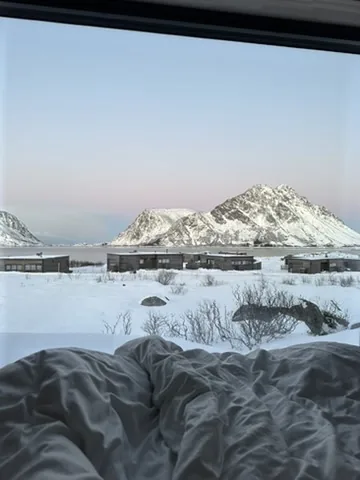
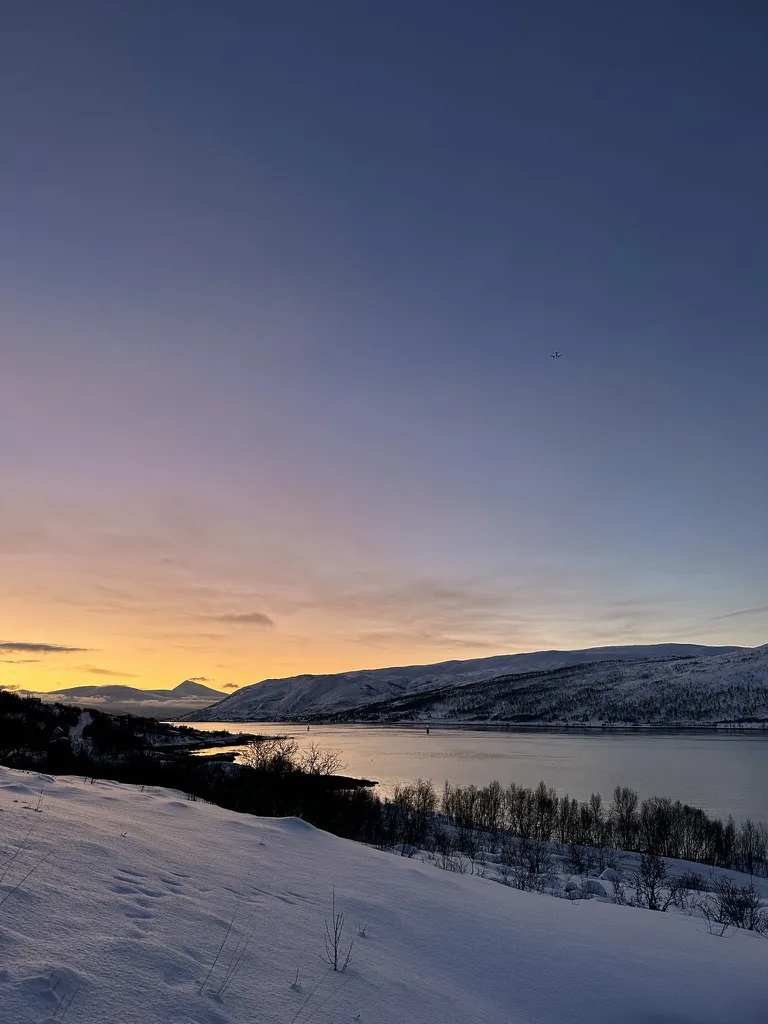
For aurora hunting this means auroras can appear in the afternoon as soon as the sky is dark enough. For excursions, drives and hikes, however, time is short. How to plan polar-night days: Polar night and daylight – how dark is it up north really?.
Autumn or late winter?
September and October are ideal if you want to combine auroras with hikes, autumn colours and open mountain roads. Lakes and fjords have not frozen yet, which allows lovely reflections. On the downside, coastal weather is often rainy. Everything about an autumn trip: Northern lights in September and October – an autumn trip north.
February and March offer classic winter landscapes with plenty of snow and enough light for husky or snowshoe tours. For families this is often the most pleasant time – details in Planning Lapland with kids – season, places, activities, clothing.
Coast or inland?
Thanks to the Gulf Stream the Norwegian coast is relatively mild, but cloudy and changeable. Inland – towards the Finnmarksvidda or on the Finnish side – it is much colder but often clearer. A base with a rental car from which you can dodge clouds noticeably improves your chances. How this works in winter is shown in our routes Lofoten in winter by car – route Svolvær, Henningsvær, Leknes, Reine, Å and Route Tromsø – Nord-Troms – Skjervøy in winter (with ferries).
| Base | Weather | Options to escape clouds | Suits |
|---|---|---|---|
| Tromsø | Coastal, changeable | Good – fjords, islands, inland as far as the Finnish border | First trip, tours, town comfort |
| Lofoten | Very changeable, windy | Medium – island chain, east and west sides | Scenery, photography, road trip |
| Alta | Somewhat drier than the coast further south | Good – fjord and plateau | Peace, cold, clearer nights |
| Senja, Lyngen | Coastal | Medium to good | Nature, cabins, active holidays |
Moon phase and solar cycle
At full moon faint auroras look paler, but landscape photos are brighter. If you specifically want to see faint activity, plan around new moon. According to SIDC/STCE, solar cycle 25 peaked in October 2024; activity usually stays elevated for a while afterwards – the 2026/27 season still benefits. In the far north, however, weather matters more than the solar cycle. Reading forecasts: Understanding the aurora forecast – Kp index, Bz and clouds.
How many nights?
There is no fixed number, because the weather decides. The more nights you spend in the region, the better your chances. Many travellers plan four to seven nights in the north and combine a town like Tromsø with a few nights somewhere darker.
Example for 6 nights in February: 3 nights in Tromsø (town, a husky or reindeer trip, one aurora tour) and 3 nights in a cabin in Lyngen or on Senja with a rental car. That combines infrastructure with dark nights. More on Tromsø: Tromsø in winter – polar night, northern lights, trips and practical tips.
Prices and booking
The most expensive weeks are around Christmas and New Year and the February winter holidays. Cheaper and quieter are often late October, November, the second half of January and March outside school holidays. Popular accommodation in Lofoten and Tromsø is often booked months ahead for peak season – book early, but look for free cancellation.
Common mistakes when choosing dates
- Planning only two nights – one weather front and the trip is over without an aurora.
- Underestimating the polar night: if you plan lots of daylight activities in December, you have only a few hours for them.
- Booking in summer: from about May to August it is too bright at night in the north.
- Looking only at monthly statistics: a clear sky beats any statistic – flexibility on the ground matters more than the perfect month.
- No winter gear: even on the mild coast, long waits in the wind feel very cold. Packing list: Packing list for −30 °C and the polar night – also with kids.
Further north? How to reach the North Cape in winter by convoy: North Cape in winter – convoy driving, northern lights and what you need to know.
Frequently asked questions
TimingWhich month is best for the northern lights in Norway?
There is no single best month. September/October and February/March are good compromises between activity, weather and daylight; December and January offer the longest nights and the polar night.
TipCan you see the northern lights in Norway in summer?
No – the north has the midnight sun in summer. It does not get dark enough at night.
TipIs Christmas a good time for the aurora?
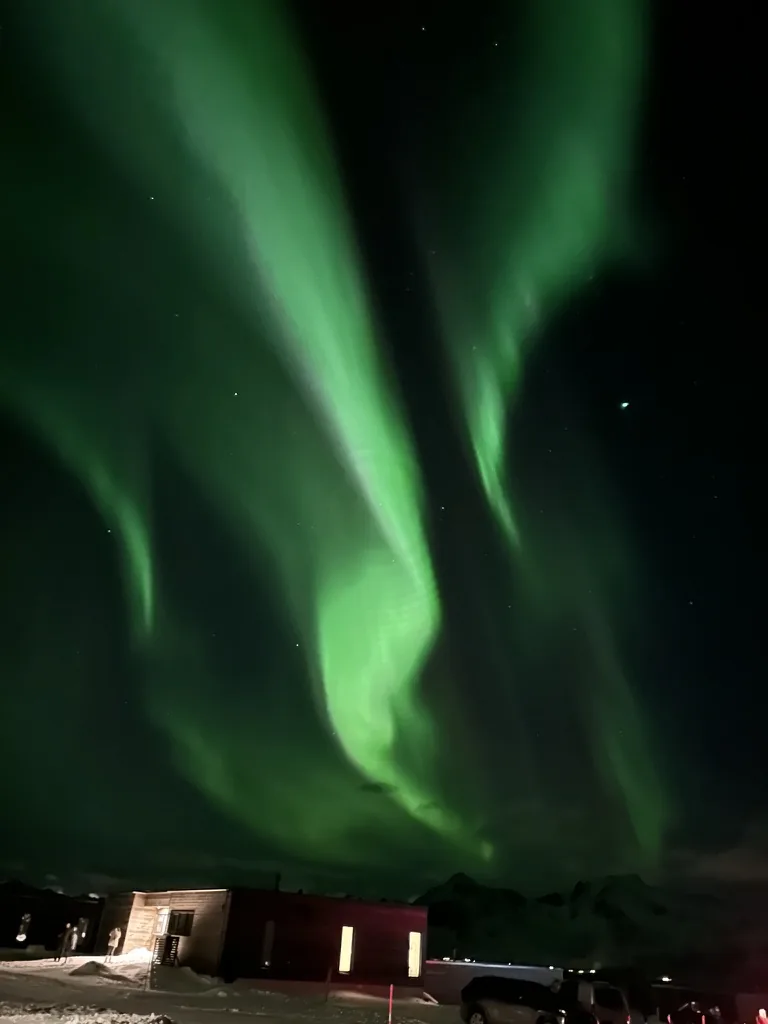
Yes, the nights are long and the atmosphere is special. But expect changeable weather, high prices and very little daylight. Our Lofoten photos were taken between 20 and 23 December.
TipIs March too late for the aurora?
No. In March nights are still long enough, and activity is higher on average around the equinox. Only from mid-April does it become too bright in the far north.
Sources
Read next
Trip planning
Planning Lapland with kids – season, places, activities, clothing
Reindeer, huskies, snow to the horizon – and temperatures where planning matters. What really counts on a Lapland trip with children.
Trip planning
Christmas in Lapland with kids – planning, Santa and alternatives
Snow, candles, Santa on the Arctic Circle – Christmas in Lapland is a dream for many families. A planning article with everything you should know early.

Trip planning
What does a family trip to Lapland cost? The cost factors
Lapland is not a cheap destination. Instead of invented flat prices we show which items to budget for – and where to save.