Trip planning
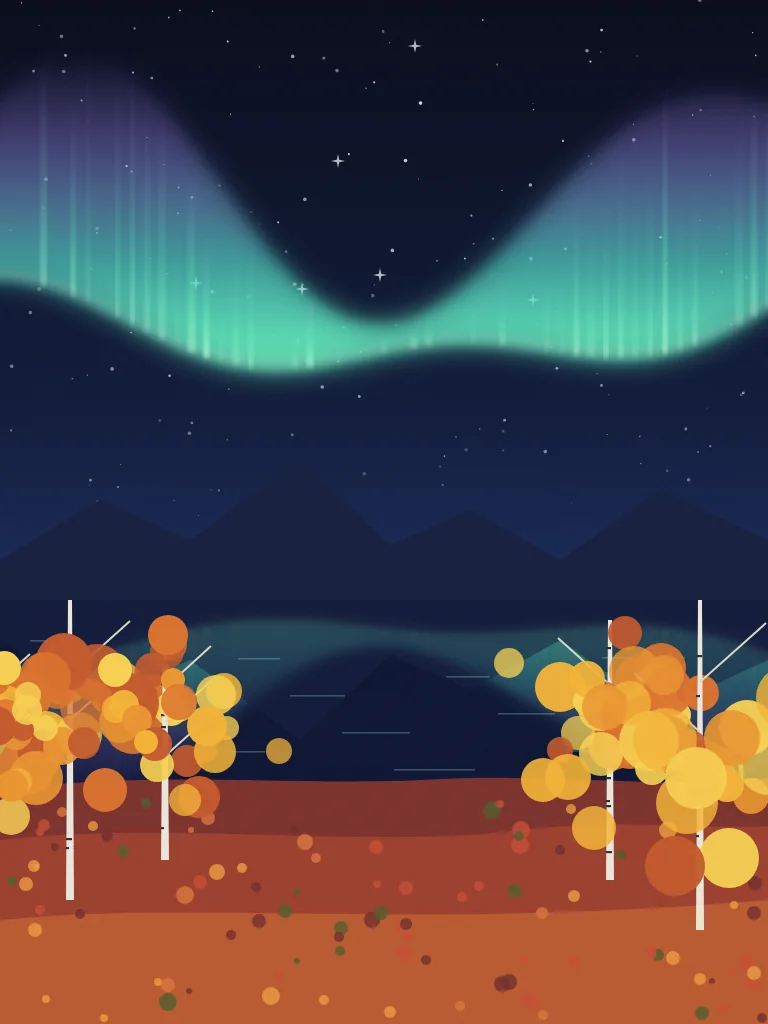
Northern lights in September and October – an autumn trip north
Autumn colours, open roads and the first dark nights – why September and October are underrated for aurora trips.
Contents
This article contains advertising (affiliate) links, marked “Ad”. How we label ads
In short: From late August the nights in the far north become dark enough for auroras again. Around the September equinox, geomagnetic activity is on average higher than in midwinter. Add autumn colours (called „ruska“ in Finland), mostly snow-free roads, milder temperatures and reflections in lakes and fjords that have not yet frozen. On the downside, coastal weather is often changeable and winter activities such as husky sledding have not started yet. As of October 2026.
Why autumn is underrated
Many people associate the northern lights with snow and the polar night. Yet a lot speaks for an autumn trip:
- Statistics: around the equinoxes (about 22/23 September and 20 March) geomagnetic storms occur more often on average. The Russell-McPherron effect explains this: in these weeks Earth’s axis is oriented to the solar wind’s magnetic field in a way that lets energy enter Earth’s magnetic field more easily.
- Solar cycle: according to SIDC/STCE, solar cycle 25 peaked in October 2024; activity typically stays elevated for several years. Strong nights are therefore still possible in autumn 2026.
- Daylight: instead of three or four hours of twilight you get ten to fourteen hours of daylight for hikes and trips.
- Driving: usually without snow and ice – manageable even without winter experience.
What to expect week by week
| Period | Darkness (northern Norway/Lapland) | Nature and weather | Notes |
|---|---|---|---|
| Late August | Short dark phase around midnight | Late summer, green landscape | First auroras possible, but narrow windows |
| 1st–2nd week of September | Several hours of real night | Ruska peak in northern Finland and inland northern Norway | Often ground frost, pleasant by day |
| Mid to late September | Long nights, equinox | Leaves fall in the far north, colours further south | Statistically active weeks |
| October | Nights longer than days | First snow possible, especially inland | Many summer services close, winter ones have not started |
Ruska note: autumn colours often begin in late August in the far north and usually peak there in the first half of September, a little later further south. Exact timing varies by year – regional tourism sites often publish ruska reports.
Pros of autumn
- Longer days for hikes and drives
- Usually no snow on the roads – driving is easier
- Aurora reflections on lakes and fjords
- Often cheaper and quieter than winter
- Temperatures mostly above or just below zero – waiting at night is more pleasant
Cons
- Shorter nights than in winter, especially in early September
- Frequent rain and cloud on the coast
- No winter landscape, no husky sledding on snow (depending on place and year)
- Some accommodation and tours pause between the summer and winter seasons
- At the end of October the clocks go back – night then starts an hour earlier
Where to go in autumn
| Region | Autumn strengths | Watch out for |
|---|---|---|
| Tromsø, Senja, Lyngen | Fjords, mountains, good infrastructure, many tours | Coastal weather, frequent rain |
| Lofoten | Dramatic scenery, beaches, hikes | Changeable weather, still busy in September |
| Finnish Lapland (Saariselkä, Inari, Levi) | Ruska, lakes, national parks, more stable inland weather | Mosquitoes in August, quiet shoulder season |
| Swedish Lapland (Abisko, Kiruna) | Considered relatively dry (rain shadow of the mountains) | Long distances, limited accommodation |
| Iceland | Auroras plus waterfalls and trails | Autumn storms; highland roads usually close in September |
A rental car is ideal for escaping clouds. Route ideas: Lofoten in winter by car – route Svolvær, Henningsvær, Leknes, Reine, Å and Route Tromsø – Nord-Troms – Skjervøy in winter (with ferries) – both far more relaxed to drive without snow.
Example: 6 days in Tromsø and Lyngen in September
- Day 1: arrive in Tromsø; evening on Kvaløya or by the Ersfjord if it is clear.
- Day 2: a hike or the cable car up the local mountain, aurora check in the evening.
- Day 3: drive towards Lyngen (by ferry or around the fjord), two nights in a waterside cabin.
- Day 4: hike in the Lyngen Alps, night by the fjord with reflections.
- Day 5: drive back overland, detour inland if the coast is cloudy.
- Day 6: fly home.
Photography in autumn
Lakes and fjords are still open in autumn – on calm nights auroras reflect in the water. Autumn leaves in the foreground add colour but need some light: a brief, faint touch of head-torch light („light painting“) or moonlight helps. Starting values and focus tips: Photographing the northern lights with phone and camera – settings that work.
Autumn packing list
- Rain jacket and rain trousers
- Warm mid layers (it can freeze at night)
- Hat and gloves for the night
- Waterproof hiking boots
- Head torch with red light
- Tripod for reflection shots
- Insect repellent for late August
For nights outside, the same rule applies: more layers than you think. The full winter list: Packing list for −30 °C and the polar night – also with kids.
Common mistakes
- Going too early: in early September nights in the north are still short – aim for mid-September onwards.
- Staying on the coast only: when it rains, look inland, where skies are often clearer.
- Expecting winter activities: sledding and snowmobiles are generally not available in autumn.
- Ignoring the forecast: how to read clouds and activity is explained in Understanding the aurora forecast – Kp index, Bz and clouds.
Autumn in Iceland
Iceland is a good choice in autumn too: from late August the nights get dark, roads are usually still free of snow and ice, and many trails are accessible. Highland roads (F-roads) usually close in September, though, and autumn storms can be fierce on the south coast. A rental car is much easier to drive in September and October than in midwinter. For the aurora night the usual rule applies: check the cloud map on vedur.is and get away from town lights. More on planning: Iceland in winter by rental car – planning, roads, insurance, auroras.
Frequently asked questions
TimingWhen can you see auroras in autumn?
As soon as the nights are dark enough – in the far north from about late August. Really long nights start in mid-September.
TipIs September better than December?
Not better, but different: more daylight, statistically a little more activity around the equinox, but shorter nights and no snow. More: Best time for northern lights in Norway – month by month.
SafetyHow cold is it up north in autumn?
Daytime temperatures in September are often around 5–12 °C, in October around 0–6 °C, sometimes lower at night. Inland is colder than the coast.
TipWhere are the best autumn colours?
In Finnish Lapland and inland northern Norway, where birches and dwarf shrubs colour whole landscapes. More on the places: Rovaniemi, Levi or Saariselkä? Lapland destinations compared.
Sources
Read next
Trip planning
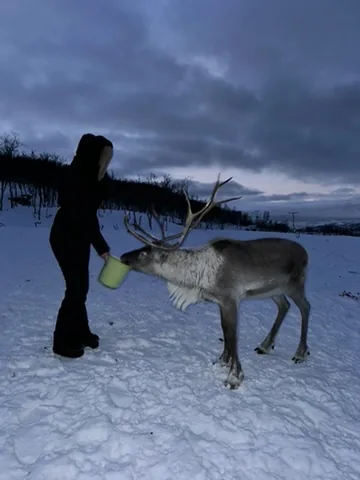
Planning Lapland with kids – season, places, activities, clothing
Reindeer, huskies, snow to the horizon – and temperatures where planning matters. What really counts on a Lapland trip with children.
Trip planning
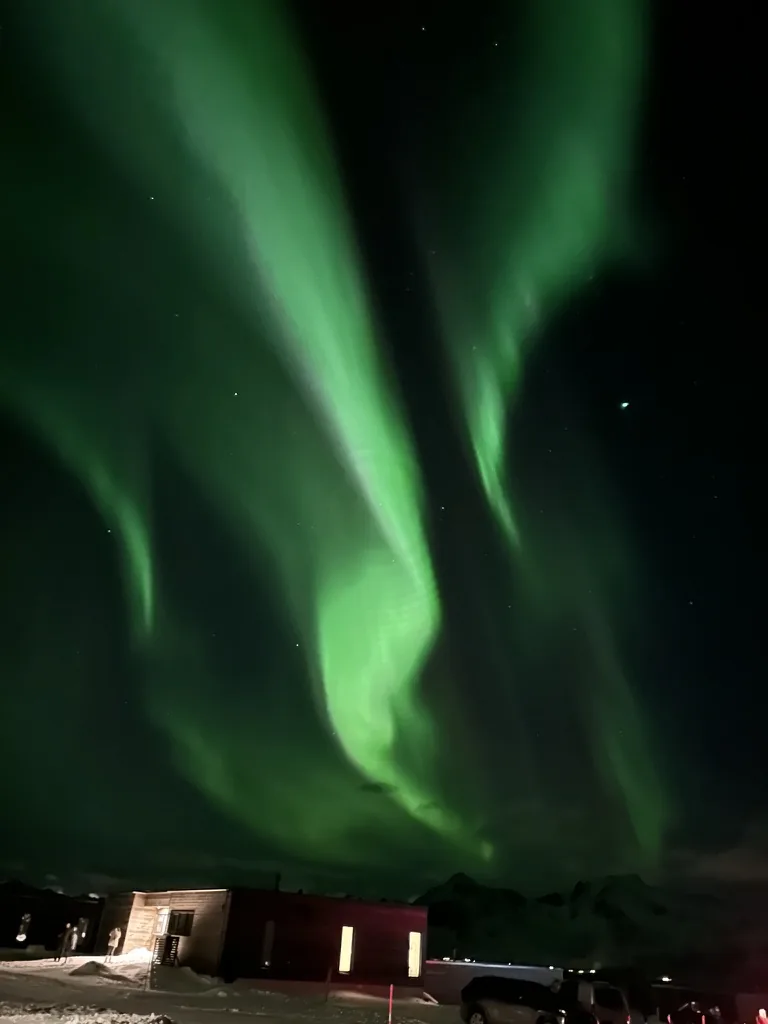
Best time for northern lights in Norway – month by month
Polar night in December or autumn colours in September? Each month has its strengths. An honest comparison for planning your aurora trip.
Trip planning
Christmas in Lapland with kids – planning, Santa and alternatives
Snow, candles, Santa on the Arctic Circle – Christmas in Lapland is a dream for many families. A planning article with everything you should know early.